
These journals trace the major milestones of the projects led by the Coop. We share our successes, our slip-ups, our questions, and today, a shift in perspective. This journal looks back at 2 sessions organized by the Bioregional Weaving Labs Collective last week, whose thematics related the weaving regenerative bioregions. We’ll be back later to introduce you to some of the inspiring people who were there (they’ll get their own dedicated journal in the coming weeks). Happy reading! 😊
Jeanne here. In the train on my way back with Igor. Back from Cilento, on Italy's southern coast, where we spent one whole week at back-to-back gatherings organised by the Bioregional Weaving Labs (BWL) collective: the first Cohort Programme Kick-off, and the Strategic Partner Gathering. Both were hosted by BWL Cilento — Future Food Institute led by the amazing and inspiring Sara Roversi —, the mayor Stefano Pisani and community of Pollica, who opened their territory to us with real generosity; and organised by the BWL support team.
This is my attempt to make sense of the week, for anyone who wasn't there and for myself.
Maybe first : what is BWL?
If you haven't come across them already, here is a small sum up : Bioregional Weaving Labs is a European collective working to build the infrastructure for bioregional regeneration — supporting place-based teams to weave together the ecological, social and economic threads of their territory, rather than leaving good initiatives scattered and unconnected.
It was founded by Karin Müller, Noa Lodeizen and Ross Hall, and - together with the wider BWL Support Team - they have worked so devotedly building the community that met in Cilento this month.
The Cohort Programme: 24 bioregions, 60 weavers, one intention
The Cohort encounter was the first of its kind and the kick-off of the Annual Cohort Programme 2026-2027.
Its intention: to formally welcome the first cohort of weaving teams into a year-long programme that will carry them from this week in Cilento through five online sessions to June 2027.
The numbers on their own say something — 24 bioregions, more than 60 practitioners, from 15 countries, from the Arctic reaches of Swedish Sápmi to the Ebro Delta in Spain, from Poland's Vistula valley to the Laconian coast of Greece.
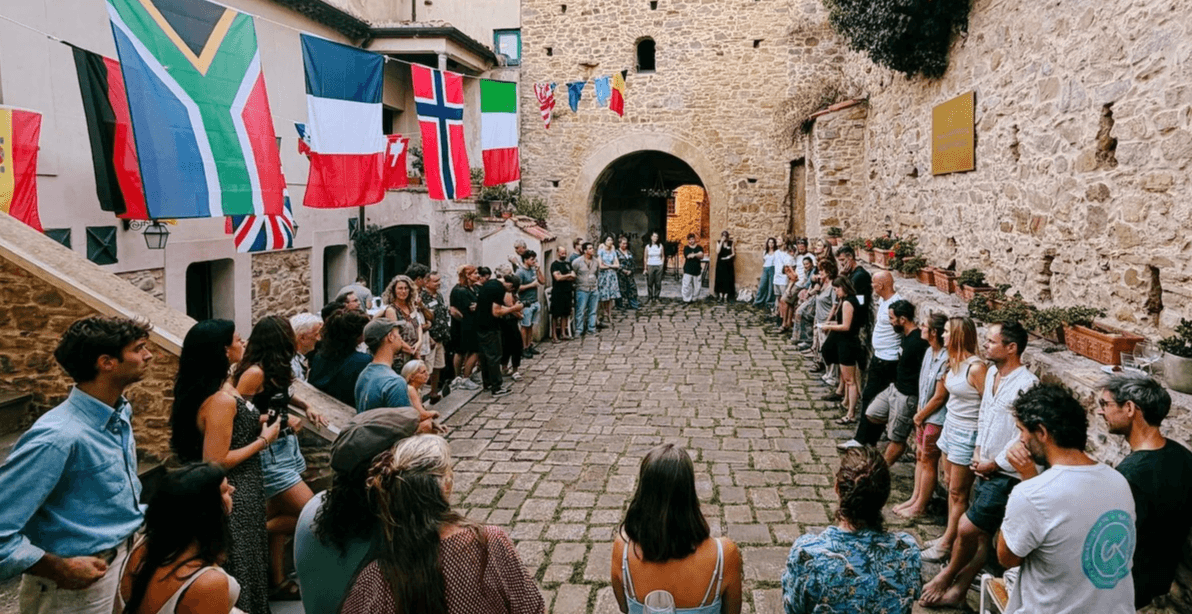
Beyond the numbers, what stayed with me was on one hand : recognising faces I'd first met in Romania, at last April's Learning Summit — people who have kept doing extraordinary, patient work in their own bioregions since, and who I got to catch up; and on the other hand to discover new people who have been walking the same path and were curious to join the discussion, bringing their experience into the game.
What a week like this actually gives people, I think, is material:
- A shared vocabulary and a set of tools to go back and question your own practice with,
- Input from peers facing the same walls,
- And — less tangible but just as real — the sense of not being alone in this, which can be crucial to keep up on the long-run.
Hearing Marina and Carla describe their river-walk work in Catalonia's Ter and Fluvià watersheds, or Camilla speaking about her multi-stakeholders project focusing on the development of the town she works at in Norway, was exactly the kind of input we need : concrete, transferable, and generously shared.
And every moments were a space for learning and sharing : I ran one of the workshop rounds myself, on Portfolio Weaving, with Natasha Hulst — as a space for sharing as well as learning, harvesting since all the people gathered for the workshop hav been weaving practitioners for 1, 5, 10 or 20 years !
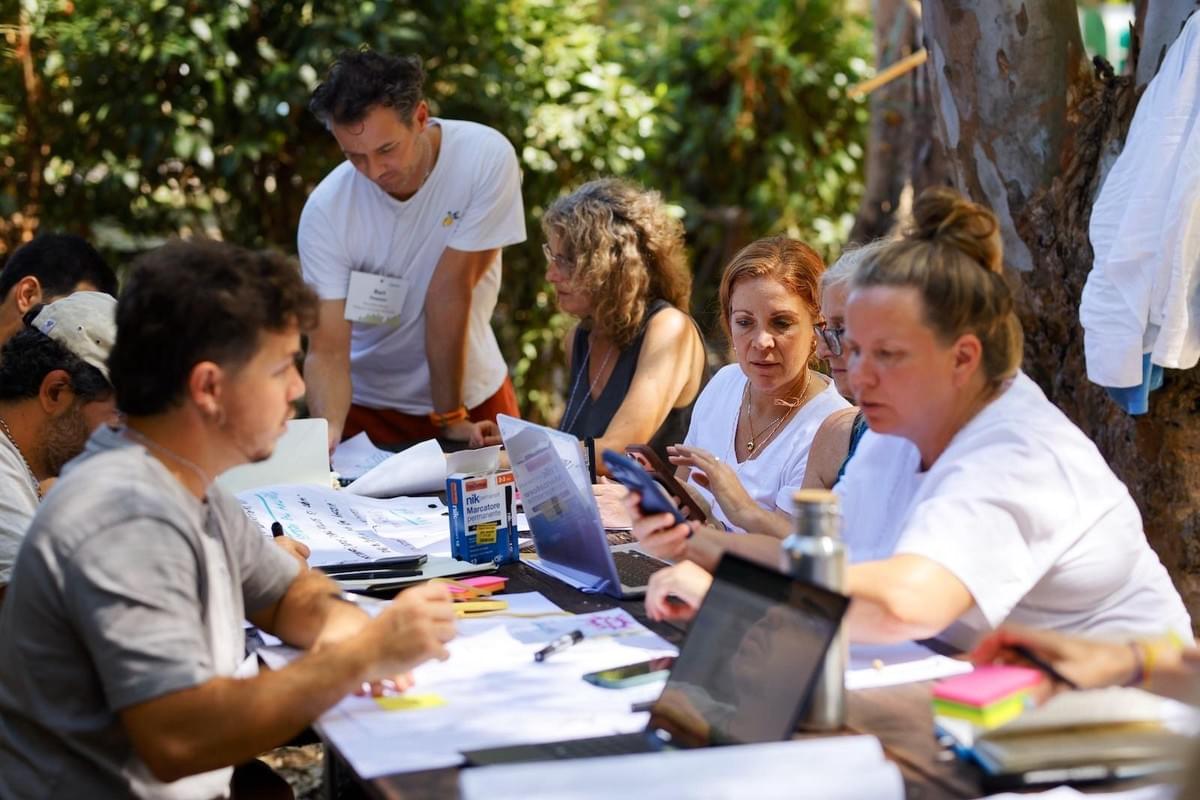
Last, the cohort program kick-off did something else, less obvious: it created space outside the field. When you're fully inside your own topic, day to day, it's hard to see the whole picture, to have the capacity and the time to challenge your own assumptions . Stepping out, if only for four days, and not rushing at the micro level of your own project, is highly beneficial in the end. It enables to come back fresh and with new perspectives.
The Strategic Partner Gathering: thinking ecosystem
Just after the Cohort program, a smaller and different group convened: the BWL collective (support team + weaving teams) and... strategic partners across the BWL ecosystem.
We all met with one shared intention — to look honestly at what we could do together, trying to identify concrete action points.
To serve that intention, here is what we did:
- On the theme of "weaving regenerative bioregions", we discussed our shared vision, clarify the ecosystem as a whole, and ran a SWOT analysis — interesting in itself, to do it WITH funders / partners and not FOR them.
- We held thematic discussions on topics such as bioregional financing facilities and demographic decline, with a real diversity of perspectives in the room (from William Butler - Specialiste on insurance for Nature Regeneration projects, CEO and founder of GaiaSicura Ltd, the world's first insurance brokerage dedicated exclusively to nature regeneration - to Karina Kleissl, co-founder of KLARO impact that aims structures to find the suited funding for their activity for instance)
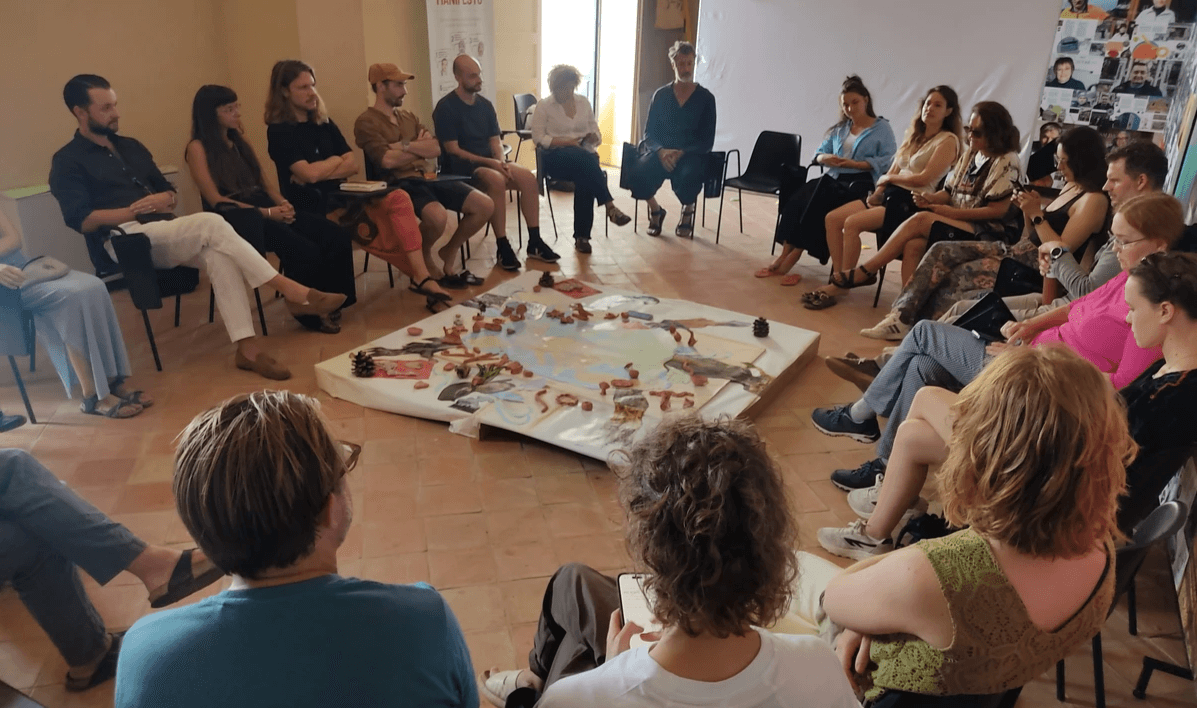
- We even did a constellation — an unusual tool for this kind of crowd — which led to some genuinely rich discussions as we watched how different concepts positioned themselves in the space. It also raised interesting questions like : how do we manage to treat partners as support, rather than as targets, of our intentions? How is it that bioregions, nature, and our collective purpose weren't more central to the space in the end? Why did the space feel so closed, and how do we make sure what we build stays porous to new forces willing to support it? These feel like valuable threads to keep pulling on.
Feelings I'm left with:
- Gratitude, and a real sense of amazement, at having been part of an event like this — one that shifted the position of funders, letting them step into the backstage of our work, and supporting the kind of partnership that gets built as a relationship, not a transaction.
- Gratitude, too, that all these people chose to give what is, in the end, their most precious resource — their time — to gather and think together about how to support bioregional dynamics.
And more broadly, the questions I keep sitting with
Well, globally, it leaves me with quite numerous open questions I don't have tidy answers to, here is a selection :
- Isn't partnering, in the end, just building relationships, one at a time?
- Is impact measurement really just a guardrail — a way for funders to make sure they're backing passion, not just intention? And would a more entrepreneurial mindset all round make it less necessary?
- What would it take for a field like insurance to genuinely support this transition? How would it look like in terms of internal way of operating?
- And what if partners were also looking for learning about mistakes that were made as well as activities and outcomes?
In closing: the place, and the people who held it - thank you
None of this happens by itself. The BWL Pollica team and the wider BWL Support Team did an enormous amount of invisible work to hold both weeks together, and it showed in every detail : the logistics, the cozy atmosphere, the amazing food, the meetings and visits of different local actors who strongly contribute to the Cilento bioregion's dynamics, the design of the programs, the preparation of the materials, etc. Such an amount of work for what were truly 2 meaningful programs all participants shared in the end their gratifulness to be part of.
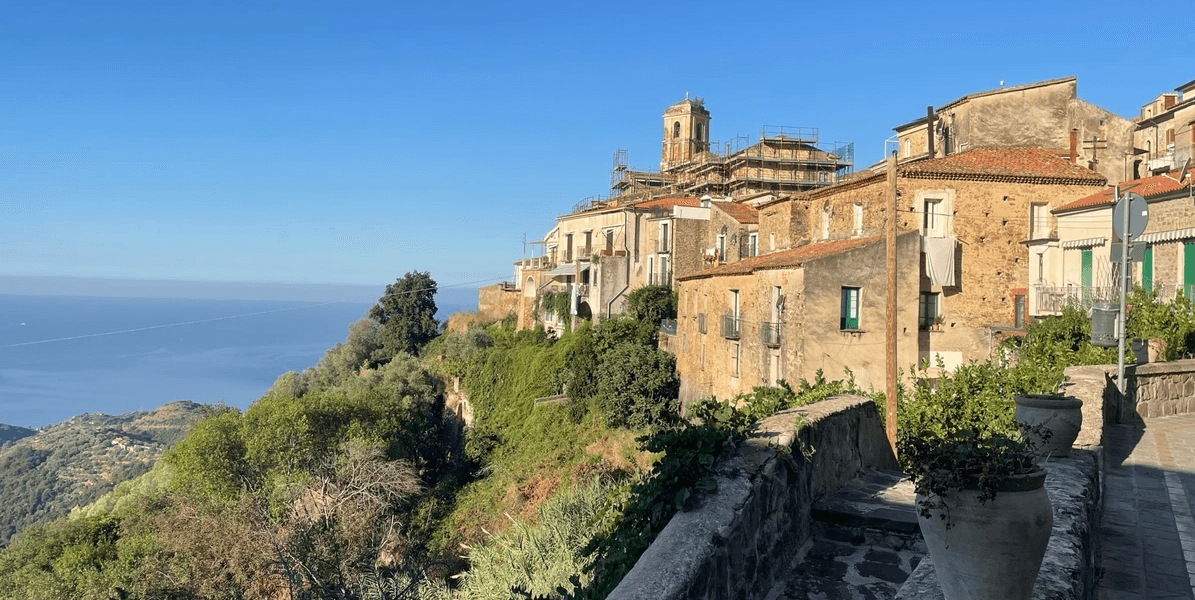
And I would like to also thank the place itself we got welcomed at : Cilento, Pollica - a gem on the Italian coast 2 hours South of Naples. We were fully immersed in an extraordinary landscape, alongside inspiring people rooted in that locality.
Thank you to BWL Cilento, Future Food Institute, Sara Roversi, and the community of Pollica for hosting us; to Noa, Karin, Ross and the whole BWL support team for the months of preparation behind it; and to every weaver and partner who made the journey.
Written by : Jeanne Allard.
Envie de suivre les prochains carnets? Abonnez-vous à notre newsletter 😄